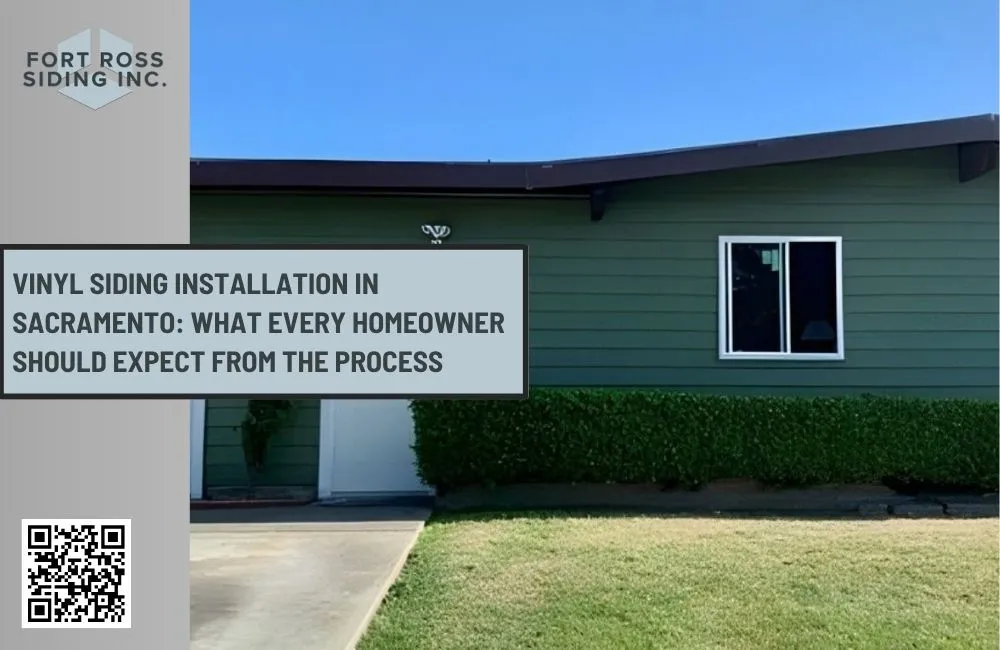
Vinyl Siding Installation in Sacramento: What Every Homeowner Should Expect From the Process
Replacing the siding on a home is more than an exterior design decision. Siding forms an important protective layer between the structure and outdoor conditions, which makes proper installation just as important as the material homeowners choose.
For Sacramento homeowners, vinyl siding can be an appealing option because it provides a clean exterior finish while requiring relatively little routine maintenance. However, a successful vinyl siding installation involves considerably more than attaching new panels to the walls. The condition of the existing exterior, preparation of the wall surface, moisture management, installation around windows and doors, and finishing details can all affect the final result.
Understanding what happens before, during, and after installation makes it easier to plan a project and communicate with a contractor. Here is what homeowners should generally expect.
Why Vinyl Siding Is Used on Sacramento Homes
Sacramento experiences long, hot, dry summers along with cooler and wetter conditions during winter. Exterior materials therefore have to deal with substantial seasonal temperature changes as well as sun and moisture exposure.
Vinyl siding is commonly considered because it does not require the same type of periodic painting associated with some traditional siding materials. It is available in numerous profiles, textures, and colors, giving homeowners flexibility when updating an older exterior.
That does not mean every property is automatically a good candidate. Existing wall conditions, architectural details, moisture problems, insulation goals, and the condition of the current siding should be evaluated before deciding how the project will proceed.
Experienced Siding contractors Sacramento homeowners consult should be able to explain whether the existing exterior can be prepared appropriately or whether damaged materials need to be removed first.
The Process Starts With an Exterior Evaluation
Before new siding arrives, the contractor should inspect the home.
This initial evaluation helps identify conditions that could affect installation. Older siding may hide deterioration, loose sheathing, water intrusion, or other problems that are difficult to see from the ground. Areas around windows, doors, roof intersections, and penetrations deserve particular attention because these transitions must be properly integrated into the finished exterior.
The contractor will also take measurements and examine corners, trim, utility penetrations, vents, and other architectural features.
Measurements matter for more than estimating material quantities. They help the installer plan panel courses, transitions, cuts, and finishing details so that the completed exterior looks intentional rather than pieced together.
This is also the right stage for homeowners to discuss whether they are planning a complete siding replacement or work limited to specific portions of the building.
Preparing the Existing Exterior
Preparation can have a major influence on how well the finished siding performs.
Depending on the home and project scope, existing siding may need to be removed. Once the underlying surface becomes visible, installers have an opportunity to identify deterioration that could otherwise remain concealed beneath the new exterior.
A wall that is damaged, uneven, or affected by moisture should not simply be covered.
Necessary repairs should be addressed so the new siding has an appropriate installation surface. Preparation may also involve working with the home's weather-resistant barrier and flashing details.
This part of the project is not especially dramatic visually, but homeowners should not underestimate its importance. A beautiful exterior finish cannot compensate for unresolved problems behind the siding.
When comparing contractors after searching for a siding installer near me, ask what their preparation process includes rather than focusing only on the appearance of the final panels.
Understanding the Role of Moisture Management
Siding is not intended to function as the home's only defense against water.
A properly designed exterior wall uses multiple components to manage moisture. Depending on the existing construction and project requirements, this may include a weather-resistant barrier and properly integrated flashing around openings and transitions.
Windows and doors are especially important.
These openings interrupt the wall surface, creating areas where careful detailing is necessary. Improper installation around them can allow water to reach materials behind the siding.
Homeowners do not need to become building-envelope specialists, but they should understand that good vinyl siding installation involves more than what can be seen from the street. The components behind the panels contribute to the overall performance of the exterior.
Installing Vinyl Siding Correctly
Vinyl expands and contracts as temperatures change. Installation methods must accommodate that movement.
Panels are installed so they can move as intended rather than being rigidly trapped against the wall. Fastening practices, clearances, panel overlap, and manufacturer requirements all matter.
If vinyl is installed incorrectly, temperature changes can contribute to visible distortion or other performance issues. That is one reason installation quality matters as much as selecting a siding style or color.
Installers generally work systematically across the exterior, establishing appropriate starting points and maintaining consistent courses. Corners, openings, soffits, and transitions require additional components and careful cuts.
Good workmanship becomes particularly noticeable in these details. Straight lines, consistent transitions, properly finished openings, and clean corners contribute heavily to the appearance of the completed home.
What Happens Around Windows and Doors?
Windows and doors require more detailed work than large uninterrupted wall sections.
The siding has to terminate cleanly around each opening while allowing the underlying water-management system to perform properly. Trim components may also be incorporated depending on the design of the home and selected siding system.
This is especially relevant when homeowners are coordinating window work with a larger siding replacement.
If both projects are planned, discussing their sequence with the contractor can help avoid unnecessary removal or reworking of finished exterior materials. Coordinating improvements can also create a more consistent finished appearance around window and door openings.
What Homeowners Should Expect During Construction
Siding installation temporarily turns the perimeter of a home into an active construction area.
Crews need access to exterior walls, and materials may be staged on the property. Homeowners can make the process easier by moving outdoor furniture, decorations, planters, and other movable items away from work areas before construction begins.
There will also be noise from removal, cutting, fastening, and other construction activities.
The exact duration of a project varies considerably. Home size, architectural complexity, accessibility, existing siding conditions, necessary repairs, weather, and project scope can all affect the schedule. A straightforward home with uncomplicated walls may progress differently from a property with multiple stories, detailed trim, numerous openings, or concealed damage.
Rather than relying on a generic timeline, ask the contractor for a project-specific estimate after the property has been inspected.
Unexpected Conditions Can Change the Project
One of the most important things homeowners can understand about exterior renovation is that not every condition is visible before work starts.
Removing old siding may expose damaged sheathing, moisture-related deterioration, or previous construction work that needs correction. Older homes can also involve materials that require additional evaluation or specialized handling.
Finding these conditions does not automatically indicate something has gone wrong with the current project. In many cases, removal simply provides the first opportunity to see a previously concealed problem.
Reputable Siding contractors Sacramento homeowners consider should explain what was discovered, why it matters, and what corrective work is recommended before proceeding with significant additional repairs.
Clear communication is particularly valuable at this stage.
Choosing the Right Color and Style
Performance is important, but siding also changes a home's appearance substantially.
Homeowners should consider how a color will look across the entire building rather than relying only on a small sample. Sacramento's strong sunlight can make exterior colors appear different outdoors than they do inside a showroom or on a computer screen.
Roof color, window frames, doors, masonry, landscaping, and neighboring architectural styles can also influence the final appearance.
Texture and panel profile matter as well. Some homeowners prefer a traditional appearance, while others want simpler lines that complement a more contemporary exterior.
Taking time with these decisions is worthwhile because siding covers such a large percentage of the visible façade.
What Should Happen at the End of Installation?
The final stage should involve more than packing up tools.
Homeowners should have an opportunity to look over the completed exterior and raise questions about workmanship or finishing details. The contractor should check transitions, trim, corners, openings, and other completed areas as part of the project closeout.
The work area should also be cleaned of construction debris and leftover material that is not being retained by the homeowner.
This is a good time to discuss basic maintenance and documentation. Homeowners should understand applicable product information and any contractor or manufacturer warranty requirements associated with the project.
When evaluating a siding installer near me, asking how the company handles the final walkthrough can reveal a great deal about its approach to customer service and accountability.
How to Prepare for a Siding Estimate
A productive estimate should involve more than receiving a price.
Homeowners can ask what condition the existing siding appears to be in, whether removal is recommended, how wall preparation will be handled, what happens if hidden damage is discovered, and which parts of the project are included in the proposed scope.
It is also important to confirm licensing, experience, materials, cleanup responsibilities, warranty terms, and how changes to the original scope are documented.
Price matters, but two proposals that appear to describe the same vinyl siding installation may include very different levels of preparation and finishing work. Reading the scope carefully provides a more meaningful comparison than looking only at the final number.
A Better Installation Begins Before the First Panel Goes Up
The most visible part of a siding project is the finished exterior, but much of the important work happens before those final panels are in place.
Inspection, preparation, moisture management, flashing, accurate measurements, appropriate fastening, and careful finishing around openings all contribute to the quality of the completed project.
For Sacramento homeowners considering siding replacement, understanding these stages makes it easier to ask informed questions and recognize a thorough installation process.
Fort Ross Siding & Windows provides siding and window services from Sacramento and has more than 30 years of industry experience. Homeowners comparing Siding contractors Sacramento can use the installation process described above as a practical framework when reviewing project scopes, materials, warranties, and contractor qualifications.
A well-planned siding project should leave homeowners with more than a refreshed exterior. It should provide confidence that the materials covering the home were installed with attention to the conditions underneath them as well.
Fort Ross Siding & Windows
Address: 2437 Harris Ave, Sacramento, CA 95838
Phone: +1 (916) 474-1941
