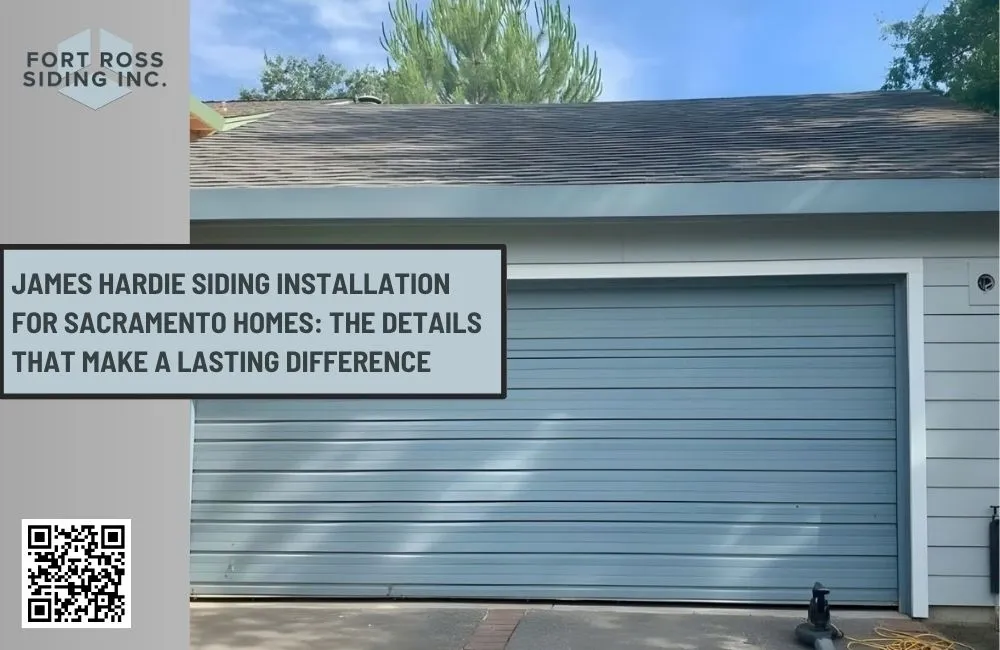
James Hardie Siding Installation for Sacramento Homes: The Details That Make a Lasting Difference
Siding covers a large portion of a home's exterior, but its job goes well beyond appearance. A properly planned siding system helps shield the structure from weather while creating a finished exterior that can withstand years of exposure. In Sacramento, that means dealing with intense summer sun, prolonged heat, seasonal rain, and temperature changes throughout the year.
For homeowners considering fiber cement, James Hardie products are often part of the conversation. Yet choosing a recognized siding product is only the beginning. The preparation underneath the siding, installation around windows and doors, moisture-management details, clearances, fastening practices, and finishing work can all influence the long-term result.
Understanding these details can help homeowners approach James Hardie Siding Installation with realistic expectations and ask better questions before construction begins.
Why Sacramento Homes Need a Thoughtful Siding Strategy
Sacramento's climate places different demands on exterior materials depending on the season.
During the warmer months, siding can spend hours exposed to strong sunlight and high temperatures. Winter brings cooler weather and rainfall, making proper drainage and moisture management equally important. Homes without significant shade may experience particularly intense sun exposure on south- and west-facing walls.
These conditions make material durability important, but they also highlight why installation cannot be overlooked.
Even a high-quality siding product depends on the wall assembly behind it. Water needs to be managed correctly, penetrations must be detailed appropriately, and the siding needs to be installed according to applicable product requirements.
When homeowners compare Siding contractors Sacramento, experience with the selected siding system should therefore be part of the conversation.
What Is James Hardie Siding?
James Hardie manufactures fiber cement siding products made from a combination of cement, sand, cellulose fibers, and water. Fiber cement provides a different set of characteristics from vinyl and natural wood while offering several styles suitable for different residential designs.
One reason homeowners consider fiber cement is its ability to provide the visual character of traditional siding without actually being wood. Depending on the product and design, homeowners can choose profiles that work with Craftsman-inspired homes, traditional properties, contemporary exteriors, and other architectural styles.
Fiber cement is also noncombustible, which can be a relevant consideration for California homeowners when evaluating exterior materials.
However, product characteristics should not be confused with whole-home protection. Siding is one component of a larger exterior wall system, and the details surrounding its installation remain essential.
A Lasting Installation Begins With the Existing Walls
One of the most consequential stages happens before the new siding is visible.
If the project involves siding replacement, removing the old material may expose portions of the exterior that have not been inspected for many years. This provides an opportunity to examine the underlying surface and identify conditions that should be addressed before new siding is installed.
Damage may be found around windows, doors, roof transitions, plumbing penetrations, or other areas where water has historically had an opportunity to enter.
Covering deterioration with new siding does not solve the underlying problem.
A contractor should evaluate relevant conditions and explain necessary corrective work before the wall is closed again. The objective is to create a suitable substrate for the new exterior rather than simply making the old siding disappear.
Water Management Deserves Serious Attention
A common misconception is that siding itself makes an exterior completely waterproof.
In reality, exterior walls typically depend on multiple layers and details to control water. The siding acts as an important outer layer, while properly integrated weather-resistant barriers and flashing help manage moisture that gets behind the exterior cladding.
Windows and doors deserve particular attention because they interrupt the continuous wall surface.
Roof-to-wall intersections, vents, hose bibs, utility penetrations, exterior lighting, and other openings also require careful detailing. Water repeatedly reaching vulnerable building materials can create problems regardless of the siding brand installed over them.
When searching for a siding installer near me, homeowners can ask how the contractor approaches these transitions. A detailed explanation of wall preparation, flashing, and water management is generally more useful than hearing only about colors and product features.
Clearances Are Small Details With a Big Job
One of the less glamorous parts of James Hardie Siding Installation is maintaining appropriate clearances.
Siding should not simply be pushed tightly against every nearby surface. Manufacturer installation instructions establish clearance and detailing requirements for different conditions.
Areas near roofing, decks, steps, paved surfaces, and other horizontal elements deserve attention because they can expose siding to moisture or debris. Similar care is needed where siding terminates around trim and other building components.
These details can be difficult to notice once a project is complete, but that does not make them insignificant.
This is an important reason homeowners should evaluate workmanship based on more than whether the exterior looks straight from the street.
Fastening Practices Matter
Fiber cement has different physical properties from lightweight vinyl siding or traditional wood boards. Installers need to use appropriate fastening methods and follow the requirements applicable to the product and wall construction.
Fastener placement, depth, and type can affect the finished installation.
The goal is not simply to attach each board securely. Installation needs to account for how the siding system was designed to function.
This is where product-specific experience becomes valuable. Siding contractors Sacramento homeowners interview should be comfortable explaining how they work with fiber cement rather than treating every siding material as interchangeable.
Cutting and Handling Fiber Cement Requires Care
Fiber cement is a substantial material, and handling it correctly matters before it ever reaches the wall.
Boards need to be stored, carried, measured, and cut appropriately to reduce the chance of unnecessary damage. Clean cuts also contribute to better detailing around corners, openings, and transitions.
Cutting fiber cement products can generate respirable silica dust, so contractors should follow appropriate safety requirements and manufacturer-recommended practices for controlling exposure.
For homeowners, the important takeaway is straightforward: professional installation involves more than knowing where the boards go. Proper tools, handling practices, safety procedures, and product knowledge are all part of the work.
The Details Around Windows Can Define the Finished Exterior
Windows naturally attract attention, which means poor siding transitions around them are easy to notice.
Trim proportions, cuts, joints, flashing, and overall alignment should work together to create a clean appearance while supporting proper water management.
Homeowners considering window upgrades alongside siding replacement should discuss both projects before work begins. Coordinating the sequence can help contractors plan transitions appropriately instead of unnecessarily disturbing recently completed work.
This is particularly useful for older Sacramento homes where both windows and exterior cladding may be approaching the point when major improvements are being considered.
Color Should Be Evaluated in Sacramento Sunlight
Color samples can be deceptive indoors.
Sacramento's strong sunlight can make exterior colors appear lighter, brighter, or otherwise different from how they look on a small sample. Shade, roof color, landscaping, trim, and the orientation of each wall can also affect perception.
Whenever possible, homeowners should evaluate potential colors outside and consider how they look at different times of day.
The siding profile deserves similar consideration. A texture or exposure that complements one architectural style may not have the same effect on another.
The objective should be a combination that looks appropriate for the home rather than simply selecting whatever happens to be popular at the moment.
Do Not Confuse Low Maintenance With No Maintenance
Fiber cement can reduce some of the maintenance concerns homeowners associate with other exterior materials, but no exterior should be ignored indefinitely.
Homeowners should periodically look at siding, joints, trim, penetrations, and other transition areas for visible changes. Gutters and drainage systems should also remain functional so rainwater is directed away from exterior walls and the foundation.
Exterior finishes can require maintenance over time as well, depending on the product, finish, exposure, and manufacturer guidance.
After James Hardie Siding Installation, homeowners should keep relevant product information, warranty documents, project records, and maintenance guidance. These documents can be useful years after construction is complete.
What Can Change the Cost of the Project?
Two houses with similar square footage can require very different amounts of siding work.
Height and accessibility matter. So do the number of windows and doors, architectural details, trim requirements, demolition needs, wall condition, and repairs discovered after existing materials are removed.
Material choices and finishing details also affect the scope.
For this reason, online averages should be treated as general reference points rather than quotes for a particular property. A meaningful estimate requires evaluating the actual home.
When homeowners search for a siding installer near me, they should compare what each estimate includes, not simply the total at the bottom of the page. A lower proposal may represent a different preparation process, material specification, or scope of work.
What Should a Final Walkthrough Cover?
Once installation is complete, homeowners should take time to examine the finished exterior with the contractor.
This is an opportunity to look at alignment, corners, trim, window and door transitions, penetrations, and other visible details. Any questions about the work should be raised before the project is formally closed.
The property should also be cleared of construction debris associated with the work.
Homeowners can use this stage to confirm maintenance guidance and review relevant warranty documentation. Understanding what the contractor covers and what is covered separately by the product manufacturer can prevent confusion later.
Good Siding Is a Combination of Product and Craftsmanship
Choosing a respected siding product can be an important starting point, but the product name alone does not determine how an exterior will perform over time.
Wall preparation, moisture management, flashing, clearances, fastening, cutting, trim work, and attention around openings all contribute to the completed system.
For Sacramento homeowners considering siding replacement, these less-visible details deserve as much attention as color and style.
A well-planned James Hardie Siding Installation should account for the existing condition of the home, Sacramento's climate, manufacturer requirements, and the specific architecture of the property. Taking the time to understand those factors can help homeowners compare Siding contractors Sacramento more meaningfully and make decisions based on the complete project rather than siding appearance alone.
Fort Ross Siding & Windows provides siding and window services for homeowners in Sacramento and surrounding California communities. The family-owned company has more than 30 years of industry experience and holds California Contractor's License #975560, including D-41 Siding and Decking and B General Building classifications.
Fort Ross Siding & Windows
2437 Harris Ave, Sacramento, CA 95838, United States
Phone: +1 (916) 474-1941
Contractor's License #: 975560
